A clear homeowner’s guide to glycol antifreeze in heat pump systems, when it is used and how to keep your system protected and efficient.
Blog
Heat Pump Glycol Antifreeze: When It’s Needed and Why
Clean Heat Solutions Ltd

Heat pump systems often run quietly in the background, so it can be a surprise to hear that some use antifreeze in the pipework. Understanding when glycol is needed, and how it should be looked after, can help you keep your heat pump efficient and protected for the long term.
What glycol antifreeze does in a heat pump
In many systems the heat pump circuit contains plain water. In others, a water and glycol mix is used instead. Glycol is a type of antifreeze that lowers the freezing point of the fluid circulating in the system.
This helps protect exposed pipework and components from freezing in cold weather. It also reduces the risk of ice damage inside the heat exchanger and external pipework if the system is shut down or loses power during low temperatures.
Situations where glycol is commonly used
Not every heat pump needs glycol. Your installer will choose it based on how and where the system is set up. Some typical situations include:
External pipe runs between the outdoor unit and indoor equipment that are exposed to low temperatures
Ground source heat pumps with underground collector loops, which always use antifreeze mixtures
Systems in outbuildings or unheated plant rooms where pipes can get very cold
Specific manufacturers’ designs that call for glycol to meet their warranty or safety requirements
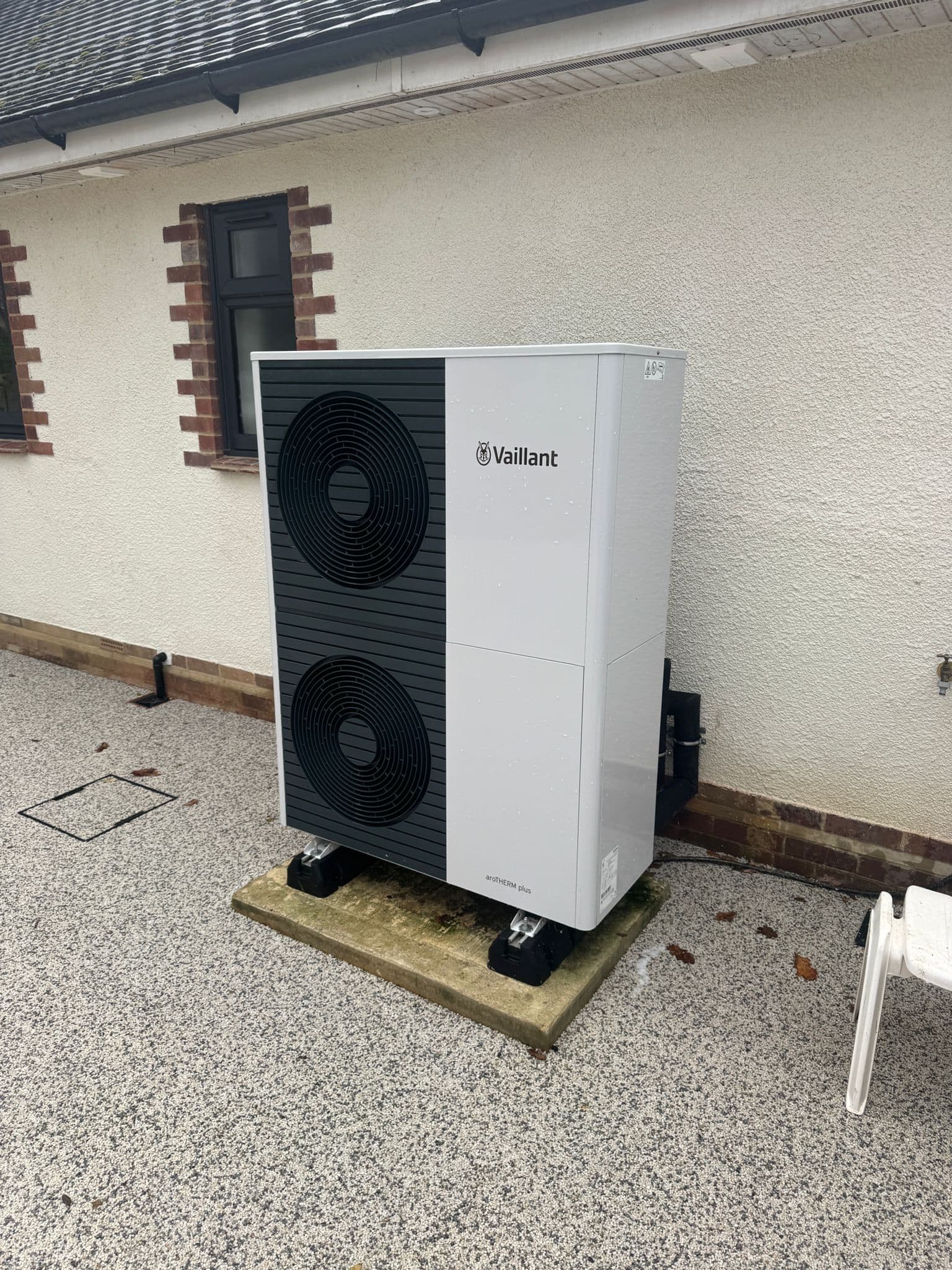
If your heat pump is a fully packaged outdoor unit connected directly to indoor radiators or underfloor heating, it might not use glycol at all. The only way to know for sure is to check your documentation or ask your heating engineer.
Getting the glycol concentration right
The amount of glycol in the water needs careful control. Too little and the system may not be protected against freezing. Too much and you can create a different set of problems.
As the glycol concentration rises, the fluid becomes thicker. That makes it harder for the circulation pump to move it around the system, and it does not transfer heat as efficiently between the heat pump and your home.
Risks of incorrect glycol levels
If the mix is wrong, you might see several knock-on effects. An under-strength mix can allow ice to form inside pipes or components, leading to leaks or even cracks.
An over-strong mix can cause issues such as:
Reduced heat transfer, meaning lower output and longer run times
Extra strain on pumps, potentially shortening their life
More energy use, as the system has to work harder to move the fluid
This balance is one reason heat pump glycol circuits should not be treated as simple “top up and forget” systems.
Why a competent engineer should test and top up
Checking glycol is not just about adding a bit more if the level seems low. A competent heat pump engineer will test the strength of the mix, the system pressure and the general water quality at the same time.
They will use proper test equipment to measure freeze protection and assess corrosion inhibitor levels. If adjustments are needed, they can calculate the correct amount and type of glycol to add, and then flush or refill if the existing fluid is in poor condition.
Attempting a DIY top up with the wrong product, or without understanding the existing concentration, can easily lead to poor performance or even damage.
Signs something may be wrong with the glycol circuit
Glycol issues are not always obvious, but there are some common clues that deserve attention. These do not confirm a glycol problem on their own, but they are a good prompt to arrange a proper check.
Watch out for things like:
• Noticeably poorer performance after cold snaps, such as rooms taking longer to warm up or the system running for much longer than usual.
• Repeated error codes or lockouts on your heat pump related to flow, low temperature or low pressure.
• Visible leaks, damp insulation or staining around external pipework, especially where pipes disappear into the house.
• Signs of corrosion on pipework or components, including rust, green staining or discoloured water from system drains.
If you see any of these, an engineer can test the fluid and check for leaks, failed insulation or other underlying faults.
Common myths about glycol and water quality
Myth 1: You can pour automotive antifreeze into a heat pump
Automotive antifreeze is designed for car engines, not heating systems. It often contains additives that are unsuitable for heat pump components and seals, and it can react badly with existing inhibitors.
Heat pumps and heating circuits need a specific type of glycol, usually labelled for HVAC or central heating use, matched to the system materials and manufacturer guidance. Using car antifreeze can void warranties and create expensive cleaning and repair work later on.
Myth 2: If there is glycol, water quality does not matter
Glycol is not a substitute for good water treatment. The water in your system still needs the correct corrosion inhibitor and should be reasonably clean to protect pumps, valves and heat exchangers.
Poor water quality can lead to sludge, scale and corrosion, which all reduce efficiency and reliability. Over time, that can be just as damaging as freezing, so both antifreeze and water quality need attention during servicing.
Simple checklist for your next heat pump service
When you book a service or health check, it helps to know what to ask so the glycol circuit is properly covered. A good engineer will often do these checks anyway, but it is worth confirming:
Test the glycol concentration and confirm the level of freeze protection
Check corrosion inhibitor levels and overall water quality
Verify system pressure, expansion vessel pre-charge and any pressure relief valves
Inspect external pipe insulation, joints and any trace heating where fitted
Review and explain any stored fault or error codes related to flow or temperature
After the visit, ask for a brief summary in plain language. Knowing the freeze protection level and any recommendations makes it easier to plan ahead.
Keeping your heat pump protected all year round
Glycol antifreeze is just one part of a well designed and maintained heat pump system. When it is correctly specified, tested and looked after, it quietly protects your pipework and supports efficient, reliable heating.
If you are unsure whether your system uses glycol, have seen recent error codes or just want peace of mind, it is a good time to arrange a professional check. Clean Heat Solutions Ltd can carry out a full heat pump service or health check, including glycol testing, water quality checks and a review of any error codes, so you understand exactly how your system is performing.
To book your heat pump service or discuss maintenance options, contact Clean Heat Solutions Ltd on 07391473964 and keep your heat pump protected for the years ahead.
Other Articles