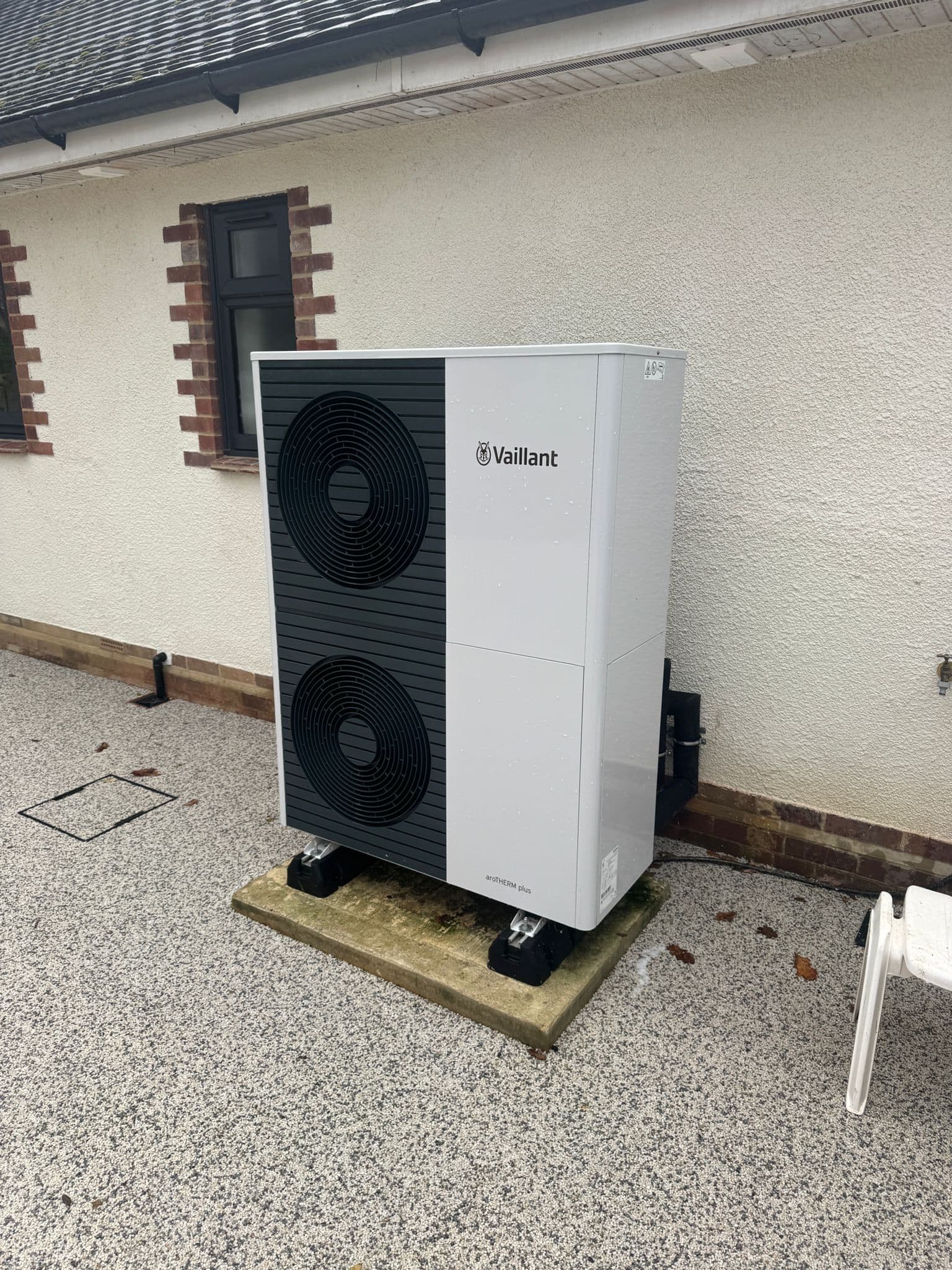
Small changes to setpoints, schedules and control modes can help your heat pump deliver steadier warmth throughout the home.
Blog
Heat Pump Thermostat Settings That Improve Comfort
Clean Heat Solutions Ltd

Heat pumps work differently from traditional boilers, so familiar thermostat habits can sometimes create chilly rooms, overheating or long recovery times. The best results usually come from steady settings, suitable schedules and controls that work together rather than competing with one another.
Choose steady temperatures over large setbacks
Most air source and ground source heat pumps are designed to run for longer periods at lower flow temperatures. Keeping a fairly steady room temperature allows the system to respond gradually and efficiently, rather than having to recover from a deep overnight or daytime setback.
A modest reduction can still be useful when the house is empty or overnight, but avoid switching the heating off for long periods unless your installer has designed the system for this approach. Raising the thermostat several degrees will not make the heat pump warm the home instantly, and may lead to extended running while floors and walls catch up.
Use a comfortable base temperature, then adjust it by around 1 to 2°C when the home is empty.
Give the system plenty of time to reach a new setting, particularly with underfloor heating.
Change one setting at a time so you can see what improves comfort.
Do not judge performance by a short burst of heating after a large setback.
Match the schedule to your heat emitters
Underfloor heating
Underfloor heating stores warmth in the floor, making it slow to cool and slow to recover. A longer heating period with a near-constant setpoint is usually more comfortable than a morning boost followed by a complete shutdown.
If your family leaves at 8am, the system may need to start well before that time, or simply remain at a slightly reduced temperature overnight. Ask your installer how the floor construction, insulation and heat pump controls affect the ideal warm-up period.
Radiators
Radiators generally respond more quickly, although heat pump radiators are often larger and operate at lower temperatures than boiler-fed radiators. You may have more flexibility with timed changes, but short, sharp heating periods can still be less comfortable than a stable schedule.
Set the radiator zone according to the room’s use and insulation, rather than expecting every room to reach the same temperature at the same time. A bedroom, hallway and home office may each need a different balance.
Understand eco and comfort modes
The names “eco” and “comfort” are not standard across manufacturers. Eco mode might reduce the target flow temperature, limit hot water reheating or prioritise lower energy use, while comfort mode may allow faster recovery or keep hot water readily available.
Neither mode is automatically best for every property. If eco mode leaves rooms cool during a busy morning, a carefully adjusted comfort setting may help. However, changing modes repeatedly can make it difficult to identify whether the issue is the schedule, the weather compensation curve, emitter sizing or the building’s heat loss.
Prevent conflicting controls
A smart thermostat and the manufacturer’s heat pump controller can both be useful, but problems arise when each is trying to manage the same zone. For example, one controller may request heat while another reduces the target temperature, causing cycling, delays or rooms that never quite reach comfort.
Decide which control is the main authority for each zone. The manufacturer’s controller often manages weather compensation, flow temperature and system protection, while a compatible room sensor or smart control adjusts demand. Compatibility should be checked before adding third-party equipment, rather than relying on a simple on-off connection.
Set hot water timings sensibly
Domestic hot water, often shown as DHW, should have its own schedule where the system allows it. Set reheating periods around household routines, such as before morning showers and later in the day, while allowing enough time for the cylinder to reach its target temperature.
Avoid scheduling hot water recovery at the same time as the home needs maximum space heating if your system has limited capacity. Your installer may also recommend periodic high-temperature cycles for hygiene protection. Keep these functions enabled and follow the manufacturer’s guidance rather than changing them purely to shorten the schedule.
Good and problematic setup examples
Family home with morning routines
Good setup: The home maintains a stable overnight temperature, starts a gentle morning recovery early enough for the building to warm naturally, and schedules DHW before showers. Problem setup: The thermostat is set to 16°C overnight, then raised to 22°C at 6.30am, leaving the house cold while the heat pump works through a large setback.
Work-from-home household
Good setup: The office zone holds a steady daytime temperature, with unused bedrooms set slightly lower and the main system allowed to modulate. Problem setup: A smart thermostat repeatedly turns the heat pump off whenever the office briefly reaches its target, while the manufacturer controller is also changing the flow temperature.
Split zones with UFH downstairs
Good setup: Downstairs UFH runs for longer at a stable setting, while upstairs radiators follow a separate, slightly more responsive schedule. Problem setup: Both zones use identical short timed boosts, so the UFH cannot warm the floor properly and upstairs rooms receive heat at unsuitable times.
Get the settings checked properly
Comfort depends on more than the thermostat display. Heat loss, insulation, emitter sizing, weather compensation and commissioning all affect the correct settings, so there is no universal temperature or schedule that suits every home.
Clean Heat Solutions Ltd can provide a control optimisation visit to review your setpoints, schedules, modes and controller compatibility. For wider support, see our servicing and maintenance and heating design services. Call Clean Heat Solutions Ltd on 07391473964 to arrange a settings-focused review and make your heat pump more comfortable to live with.
Other Articles