Blog
The Offical Guide To How Heat Pumps Work: Air- and Ground-Source Explained
How heat pumps work: a clear explanation for homeowners
If you’ve been researching low-carbon heating options, you’ve likely asked: how do heat pumps work? This guide explains the technology behind the two most common systems — air-source and ground-source heat pumps — in plain language so you can make an informed decision for your home. Contact Clean Heat Solutions on 07391 473964 if you need an MCS-certified heat pump installer.
Heat pump fundamentals: transferring heat, not generating it
At heart, a heat pump is an electrical device that transfers heat from one place to another. The technology is not new — it has been used for decades in Sweden and around the world, and heat pumps are commonly found in refrigerators and air conditioners. Rather than creating heat through combustion, a heat pump absorbs low-grade thermal energy from a source (air, ground or water) and concentrates it to a higher temperature suitable for your home.
The refrigerant cycle (step-by-step)
Heat pumps transfer heat by cycling a substance known as a refrigerant through an evaporation and condensation cycle. The refrigerant is pumped between two heat exchangers by a compressor.
- Heat absorption: The refrigerant evaporates at low pressure in the evaporator coil and absorbs heat from its surroundings.
- Refrigerant circulation: The low-pressure refrigerant vapour is conveyed towards the compressor.
- Compression: The compressor raises the pressure and temperature of the refrigerant gas.
- Heat release: The hot refrigerant passes through the condenser, where it condenses at high pressure and releases the heat it absorbed earlier in the cycle to the home’s heating circuit.
- Cycle reversal: In warmer months many systems reverse the process to provide cooling, expelling internal heat back to the external source.
Air-source heat pumps: extracting heat from the air
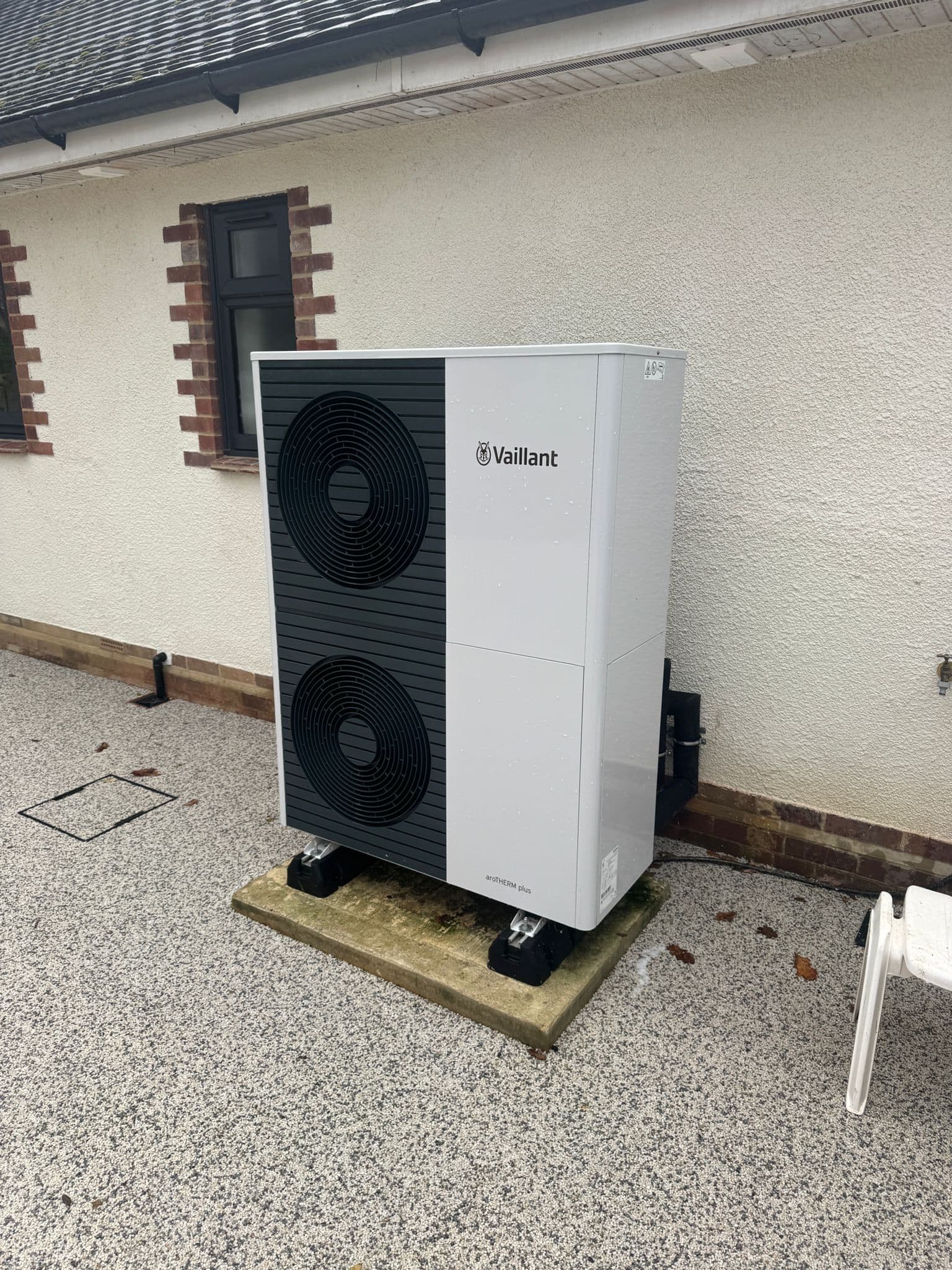
Air-source heat pumps take heat from outside air, even when temperatures are low. An outdoor unit contains the evaporator coil where the refrigerant evaporates and captures heat. The compressor then raises the refrigerant’s temperature before it releases that heat indoors via a condenser and the home’s heating system.
Air-source heat pump summary
- Absorption of heat: The evaporator coil absorbs heat from the outdoor air, even in cold temperatures.
- Refrigerant circulation: The refrigerant within the coil evaporates, turning into a low-pressure gas.
- Compression: The compressor increases the pressure and temperature of the gas.
- Heat release: The hot gas passes through the condenser coil, releasing heat into your home.
- Refrigerant reversal: In summer, the process reverses to cool your home.
Ground-source heat pumps: using stored solar energy in the ground
Ground source heating is solar energy that has been stored in the ground. As the sun begins to shine more brightly in the spring, energy is gradually stored beneath the soil’s surface — the warmer it gets, the lower it is stored. By the time autumn arrives, sufficient solar energy will have been accumulated to heat your home over the cold winter.
Using a liquid-filled loop, also known as a collector, it is possible to collect solar heat stored deep in the soil, at the bottom of a lake or a few metres beneath your lawn. Your home’s energy requirements, your heating system, and the nature of your property will determine the type of heat source that best suits your needs.
Ground-source heat pump summary
- Loop system: A loop of pipes buried underground circulates a mixture of water and antifreeze.
- Heat exchange: In winter, the liquid absorbs heat from the earth and carries it to the heat pump.
- Compression: Similar to air-source heat pumps, compression raises the temperature for heating.
- Distribution: The heated air is distributed throughout your home via ducts or a radiant floor system.
- Refrigerant reversal: For cooling, the process is reversed, expelling heat to the ground.
Benefits of installing heat pumps
Smart technology integration
For increased convenience and efficiency, smart technology is frequently integrated into modern heat pump systems. Smart thermostats optimise energy use by enabling remote temperature control, and certain systems enhance their efficiency by using machine learning algorithms to adjust to your heating habits.
Grants
Numerous governments provide grants and incentives to promote the use of heat pumps and other renewable energy systems. Look into the programmes offered in your area; these incentives — which could include tax credits, rebates, or low-interest loans — can help lower the initial costs of installing a heat pump and make eco-friendly heating more financially feasible.
Combines with renewable energy sources
You may want to add some additional renewable energy sources to your heat pump system. Incorporating solar panels to produce electricity for your heat pump lessens your dependency on traditional energy sources and improves the system’s sustainability. Hybrid heating systems bring together several technologies — for instance, a hybrid heat pump incorporates a traditional boiler, giving you the freedom to select the energy source that works best depending on the outside environment. Hybrid systems offer improved energy efficiency, particularly in areas with erratic weather.
Heat pump installations in Portsmouth, Southampton, West Sussex and Hampshire
Clean Heat Solutions Limited goes above and beyond the basic installation of heat pumps; we ensure that your heating system is operating at peak efficiency and create effective heating systems for homes in West Sussex, Hampshire, Portsmouth, and Southampton.
To schedule an installation of a heat pump in West Sussex, Hampshire, Portsmouth, or Southampton, please contact Clean Heat Solutions Limited on 07391 473964 or via our contact page.
Other Articles