Blog
In-depth Heat Pump Guide: Types, Efficiency & Installation Tips
In-depth guide to heat pumps
Considering a heat pump installation in West Sussex or Hampshire? Contact us now on 07391473964 for a free consultation. This guide explains how heat pumps work, the different types available, how efficiency is measured and what affects running costs.
How heat pumps work
Heat pumps are an energy-efficient way to heat your home by capturing heat from the environment. They use a small amount of electricity to move this heat into your home, making them a sustainable choice.
The science behind heat pumps
Heat pumps work on the principle of transferring heat from a colder area to a warmer one. They use a refrigerant gas, which is compressed to increase its temperature. This heated refrigerant is then passed through a heat exchanger, transferring its heat to your home. The process is then repeated, making it a continuous cycle of heating.
Types of heat pumps and their efficiency
There are various types of heat pumps, but they all work on the same basic principle. The two most common in UK homes are:
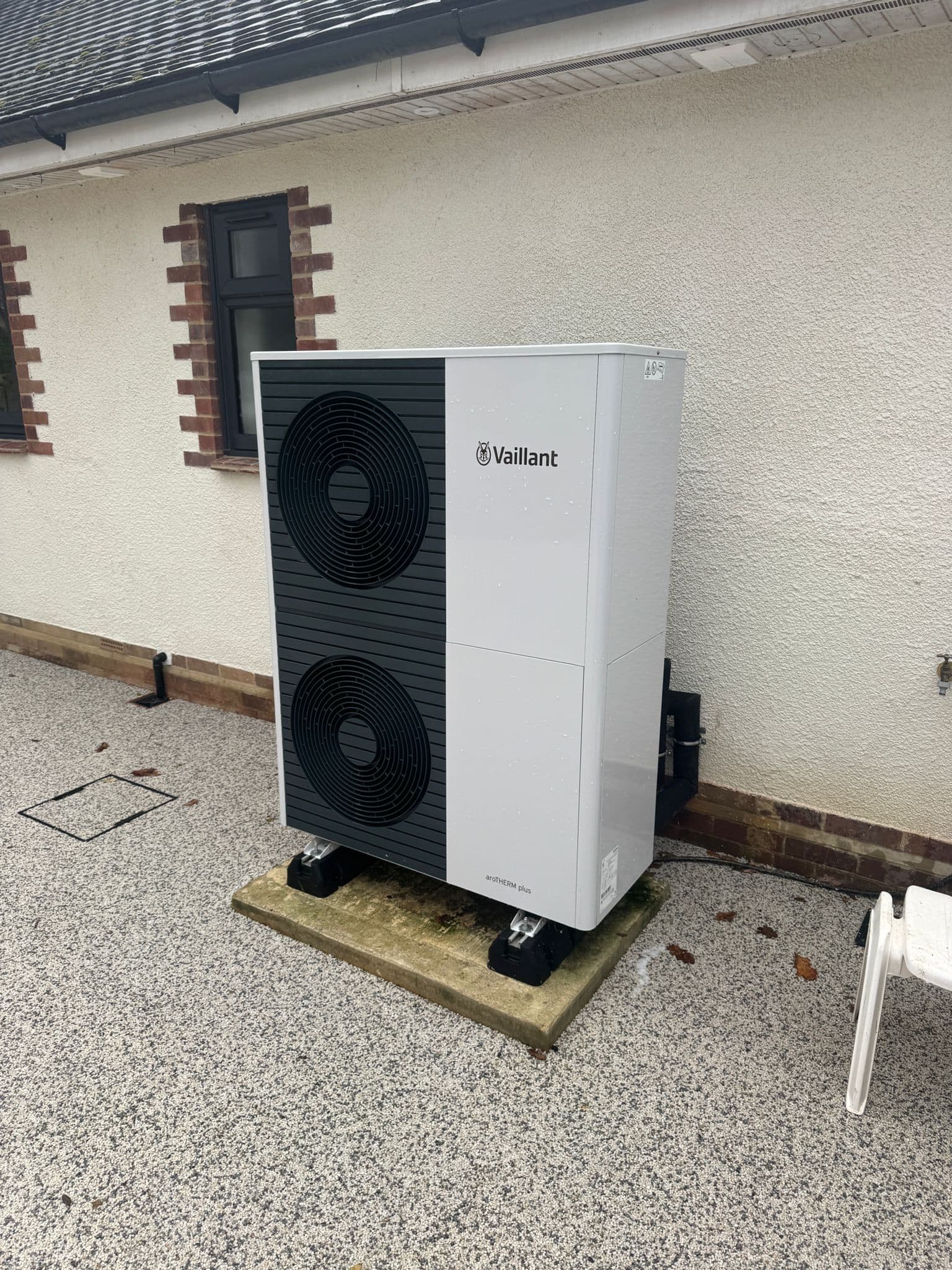
- Air source heat pumps — these are the most common type of heat pump in the UK. They are generally easier to install and are suitable for homes in West Sussex and Hampshire with outdoor space like a garden. Learn more about our air source heat pumps here.
- Ground source heat pumps — these require a larger outdoor space and involve more complex installation. However, they are highly efficient and can be a good option if you have the space.
Efficiency metrics: CoP and SCoP
The efficiency of a heat pump is measured using the Coefficient of Performance (CoP) and the Seasonal Coefficient of Performance (SCoP).
- Coefficient of Performance (CoP) — the CoP tells you how efficient the heat pump is under specific test conditions.
- Seasonal Coefficient of Performance (SCoP) — the SCoP gives you a better idea of its efficiency throughout the year, taking into account seasonal temperature changes.
Will a heat pump save you money?
The running costs of a heat pump depend on various factors such as the type of fuel you are replacing, your electricity tariff, and the efficiency of your heating system. Heat pumps are generally more cost-effective for those using LPG or oil as their current fuel source. For those using gas boilers, the running costs might be slightly higher unless the system is designed for maximum efficiency.
Factors affecting running costs
- Type of fuel being replaced
- Electricity tariff
- Efficiency of the heat pump
- Design of your central heating system
Designing your heat pump system for efficiency
The key to an efficient heat pump system lies in its design. The closer the required indoor temperature is to the outdoor source temperature, the more efficient the system will be. Tips for efficient design include:
- Use larger radiators or underfloor heating to allow for lower water temperatures — see our underfloor heating services here.
- Run the heating system for longer durations at lower temperatures.
Permissions and notifications
Before you go ahead with your heat pump installation in West Sussex or Hampshire, you should:
- Check with your local planning department to see if planning permission is required.
- Notify your local district network operator (DNO).
Get in touch
Ready to make the switch to a more efficient heating system? Call us on 07391473964 or email info@cleanheatingsolutions.co.uk for expert heat pump installation services in West Sussex and Hampshire.
Other Articles